Pages

Showing posts with label stockpile. Show all posts

11/30/11

Save Money While Building Your Pantry

I've made a concerted effort over the past year to lower my family's food budget, while expanding our food storage, or stockpile. It's difficult to accomplish both of these goals simultaneously, but I've developed some tips that have worked for us, and wanted to share them with you.

  • Use coupons. Stockpiling and couponing go hand in hand! Visit Southern Savers and The Coupon Wizards and read up about sale cycles to see what I mean. They cover the subject quite well, and taught me how to use coupons in an effective way (not an extreme way). 

  • Buy a stand alone freezer. My preference is a standing freezer. We got ours at a garage sale & it’s been running perfectly for 6 years now (knock on wood) in our garage. I wouldn’t have been able to build our food storage properly without it. We can buy on sale & store it in the freezer. Even a chest freezer would be helpful, and they’re frequently found second hand. Ours has been such a worthwhile investment, and by having it, we've saved at least double what we paid for it. 

  • Learn what can be frozen & what can’t. Knowing that will determine how much of some items you should buy. Extending the expiration date by freezing items until you need them helps you stock up & it helps you be able to buy more when on sale. Saving money while building your food stores... perfect! I found this great resource on freezable foods & I've found it very helpful.

  • Eat what you have, not what you want. I know, this sounds harsh, but hear me out. I try my best to use what’s in my fridge, freezer & pantry to prepare meals. Stopping at the store for a missing ingredient is not an effective use of time or money. Buy things on sale, buy several to stock up, then don’t buy it again until it goes on sale again! If we run out of shrimp, I might say “I sure wish we had some shrimp, that sounds yummy.” But, we don’t go buy it. Because then I add “I sure hope it goes on sale again soon!” And when it does, I’m likely to buy more than last time since we ran out! It requires shifting your mindset a bit, but it's paid off for us.

  • Have enough options in your own home, so that if you run out of something, you don’t have to buy it right away! For example- we still eat ‘healthy’ breakfast cereal in our house. (And Rice Krispies, cuz I just couldn't pass up a recent deal!) Now, I'll admit- I’m learning more & more that there is no healthy breakfast cereal. And I’m coming to grips with that & slowly preparing my children for this harsh reality. But for now, we still eat it. And that stuff is expensive! We buy lots of it when it’s on sale & have a coupon to go with it. If we run out, we don’t go buy more cereal. It just happened last month. We were without cereal for 4 weeks. We used the oatmeal that I had gotten on sale & stocked up on. We had peanut butter & jelly sandwiches since we had bought peanut butter & bread on sale & stocked up. We would have had eggs but one of my three kiddos loathes eggs. Anyway, we made it through without buying more cereal. When it did go on sale last week, we stocked up again & the kids were extra excited to have it back.


  • Think outside the box. I used to be a by-the-book cook. If a recipe called for milk, I made it with milk. If I didn’t have milk, I didn’t make the recipe! Now, I have learned that I could use half & half, or heavy cream if I have it. Sometimes even sour cream will work. Not only does this cut down on store trips, it cuts down on buying things that aren’t on sale, and allows me to cook a wider variety of recipes! That's just one example. If you think outside the box & be a little creative, you can prepare a meal with what you have, just by adapting the recipe a bit.

  • If one store typically has an item you use at a good price, buy it there EVERY time you go in. We have one warehouse store that has organic sugar at a decent price in a large bag. We’ve tried finding it in bulk, and it’s not available locally. We’ve shopped around for prices & when we saw this store’s price we knew it was great. So we buy a bag of sugar every time we go in to that store, whether we ‘need’ sugar or not. Each store might have an item like this. Our grocery store brand egg noodles are a favorite for us. Not a name brand, the store brand. So each time we go to the grocery store we buy a bag. These examples don’t really go on sale, never have coupons, we always use them, and we know we’re getting the best price at that store. So, we keep those items in mind as we shop & slowly build our pantry by purchasing them as a habit.

  • Repackage some items. Now, this doesn’t make sense for everything. For some foods & pantry staples you’re going to need to have the expiration date for reference. Many of my pantry items are in their original packaging for this reason. It also helps if, God forbid, there were a recall & I needed to find the batch number. But there are some things that we eat often enough, or have so much of, that it makes more sense to repackage. Cereal is like that in our home. We saved old organic brown rice containers with screw on lids and we transfer the cereal into them. It saves space, keeps the cereal fresher, and makes it easier to pour. I have many pretzel barrels with screw on lids saved for this as well. We store rice in those, and I'm about to pour my bags of sugar & flour into them as well. You could also purchase food grade buckets. I'm trying to spend as little as possible, so I'm using what I have.

  • Chop your meat for meals while it’s frozen. No, not solid, obviously, but still mostly frozen. It’s much easier to get a small dice on chicken, and it slices cleaner & straighter. I’ve done this for over a year, and now refuse to do it any other way. I can cut a boneless skinless chicken breast into pieces so small, that I can use 3 small breasts to feed 5 people, and everyone feels like they got enough. I know that it’s still the same amount of chicken, and it’s all in their head… But they’re more satisfied with their meal when they have 12 smaller bites of chicken served to them, instead of 4 larger bites. I think it would work for beef as well when making stew, or soups. I’ve stretched our meat & saved a lot of money with this simple trick. 

We’ve expanded our pantry using these tips & freed up money in our budget to add to our food storage. I’m always looking for more ways to improve & I’d love to hear your tried & true tricks! What would you add to this list? Please share your ideas & leave a comment!

This post is linked to The Frugal Days, Sustainable Ways Wednesday Blog Hop!

11/15/11

The Bean Times (part 2)


During The Bean Times, I heard a few friends bragging about their savings using coupons paired with store sales to save a lot of money on their grocery bill. This seemed to be the missing link we needed to implement in our efforts to get our budget on track! I went to a little informal class where a friend shared her strategies & the websites she used to develop her shopping lists & find the corresponding coupons she needed for her weekly grocery buying. It took six long months for me to fully wrap my head around the concept. I don’t understand why I had such a mental block, but I just couldn’t get it. I did keep buying Sunday papers though, and putting them aside, in hopes that it would click!

A month later, I had a dear friend over for dinner. During the evening, she & her husband talked about preparedness & mentioned food storage & stockpiling. I had no idea this was related to couponing at the time. But my husband & I knew wisdom when we heard it & our perspective on our household food started to shift even more. Of course, we wondered how we could possibly afford to build a stockpile when we were just starting to make headway with our budget.

During the months that followed, as I tried desperately to connect the coupon dots, I realized that an important part of the goal is to stockpile the items on sale. Not in an extreme way. But I was surprised to learn that to maximize savings, it’s necessary to buy enough to feed your family for about 12 weeks. That’s the general amount of time until most items goes on sale again. For different items, the amount you buy is different. There’s no need to buy as much mustard as you would toilet paper, for example. Your family might use both, but you use much more of one in 12 weeks than the other!

WOW! When I realized these two concepts that were suddenly so important to us (saving money on our food bill & stockpiling food for preparedness purposes) were intertwined, my jaw dropped!


Sure enough, as soon as my slow-to-understand brain finally caught on to the coupon lifestyle our pantry exploded. Each week we were bringing in more food, at such an incredible savings, that our kitchen was overflowing & our budget was healing! We maintained our meat stretching, bean eating (less bean eating than before) strategy, while shopping for the things on sale each week. Soon, we had built quite a pantry stockpile & felt more prepared. We could easily eat for a few weeks if we couldn’t make it the store for whatever reason. We might have spaghetti three nights out of seven, but we could eat!

A lot of the items that end up on the weekly shopping list are shelf stable foods. I’m the first to admit that this doesn’t help much with nutrition, or waistlines. But since our perspective had shifted to shelf stable preparedness, we were happy to be buying those items, even if we would only eat them in an emergency. In my preparedness research, I’ve read that you must eat from your stockpile. This is to make sure you & your family like the foods, and also to keep expiration dates rotating. We do that, but it doesn’t make up the bulk of our diet. If the power were to go out for 5 days though, we have enough canned ravioli in pop top cans to feed us, even if we wouldn’t eat that sort of food in a normal scenario. And we got it for pennies!

Eventually, we bought industrial kitchen shelving to house our stockpile in the kitchen, as it grew past our small cabinet pantry. I have a photo of when we first installed them, and to compare it now, the increase is substantial! Buying the shelving was easily paid for in just one week’s grocery bill savings! Keep in mind that buying too much of something wastes your household storage space & risks wasting food when you haven’t eaten it by the expiration date. But, we are trying to intentionally build a stockpile for preparedness purposes! So, we do buy a bit extra. This gives us peace of mind, knowing that if we are unable to get to the store for a while - we'll survive! Our goal is to have a years worth of food for our family of 5.


By staying on top of the coupon matchups each week, our budget is almost out of the paycheck to paycheck classification! It’s been 1 year since the start of our bean times, and I know we’d be further along if I had grasped the coupon concept sooner but I'm happy with the progress we've made. We’ve only been couponing for 9 months. And frankly, when I cook beans for dinner, especially in the beloved slow cooker, I smile & feel rather nostalgic. And satisfied. I feel like it’s been a small journey. We made positive changes that resulted in success, and we keep doing that- one step at a time! And the way that fixing the budget problem & reaching the preparedness goal ended up having the same solution?! Well, that's just so cool!

Eventually, I would love to replace this method with growing our own food & preserving it ourselves. I think our grandparents had the right idea! Instead of running to the store every few days, they ran to their pantry or cellar to get what they needed! Frugal AND self sufficient!

This post is linked to The Frugal Days, Sustainable Ways Wednesday Blog Hop!

11/12/11

Dehydrating Carrots for a Prepared Pantry

I thought it would be a good idea to have some pantry staples that aren't readily available in the store. I thought carrots would be a good food to start with. Dehydrating them takes up a much smaller footprint than buying the same amount in cans. I'm also able to use organic, and there aren't any other ingredients -just carrots. It was a simple process! I thought it might be helpful to take you through it, but please forgive the amateur photos. Hey, this is my life & my family camera, I'm just keeping it real!

I bought a giant bag of organic carrots at Costco & then peeled them, cut off the ends, and chopped them into half-moons. I took care to make sure the pieces were cut to about the same size.


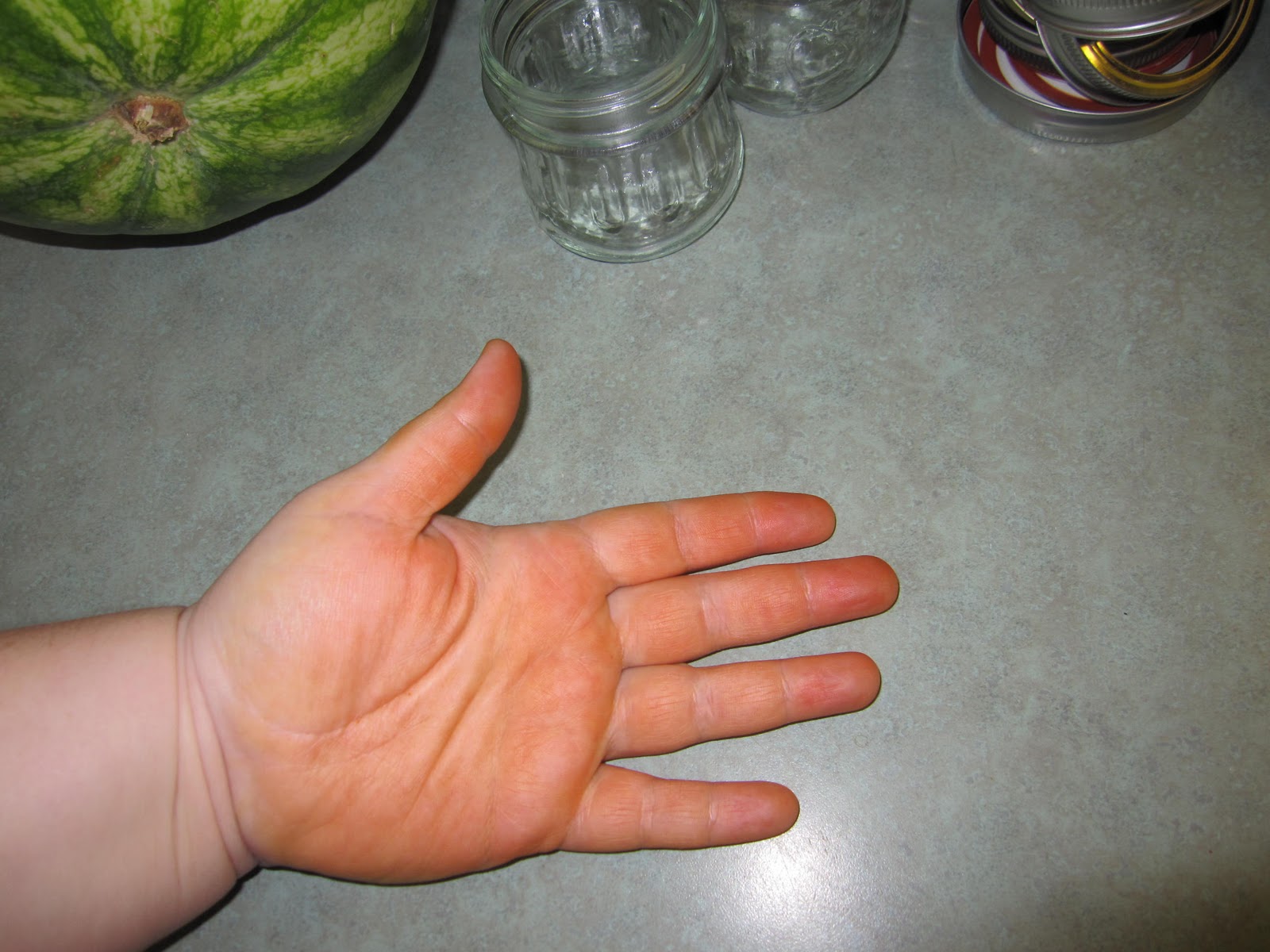
In the spirit of full disclosure, this is a side effect:


I boiled a large pot of water & parboiled them in two batches, for just 3 minutes.


I used a large strainer to get them out, drain them over the pot, and then spread them out on the mesh screens of the dehydrator.

I prepared about 4 pounds of carrots & they took up 4 trays, with plenty of room on the tray. I dehydrated them for about 24 hours at 125 degrees.


I knew they would get smaller, but wow! These are SO tiny in comparison!


4 pounds of carrots, all peeled, chopped & ready for soups, stews, or pot roast! And they fit in a quart mason jar!


Next up are potatoes, celery, and possibly tomatoes. Hmm, mushrooms might be a good one! Have you dehydrated foods for your pantry? I'd love to hear your suggestions!

This post has been linked to The Homestead Barn Hop.

Related Posts Plugin for WordPress, Blogger...